
Most Michigan homes do not have an insulation problem so much as an air problem. A house in Lapeer or Genesee County can be packed full of fiberglass batts and still feel drafty in January, because batts slow heat down but do nothing to stop air from moving through the gaps around and behind them. Spray foam is the only common insulation that does both jobs in a single pass — it insulates and it air-seals at the same time.
Below is a straight look at what that actually buys you, and why each benefit matters more here than in a mild climate. If you already know you want foam and just need to know where to use spray foam in your building, that is covered in a separate article.
The Benefits of Spray Foam Insulation, One by One
1. It Air-Seals and Insulates in One Step
R-value is measured in a lab with still air on both sides of the sample. Real walls are not still. Wind pushes cold air into the cavity, warm indoor air rises and escapes at the top of the house, and fibrous insulation lets that air pass right through it. That is why a wall rated R-19 on paper can perform closer to R-12 or R-13 in a February wind.
Spray foam expands to roughly 30 to 100 times its liquid volume and cures against every surface it touches — around wiring, plumbing penetrations, top plates, odd framing bays and the ragged edges that batts can never be cut to fit. There is no gap left for air to move through, so the rated R-value is much closer to the delivered R-value. In a typical retrofit we routinely see blower-door numbers drop by half or better after the attic plane and rim joist are foamed.
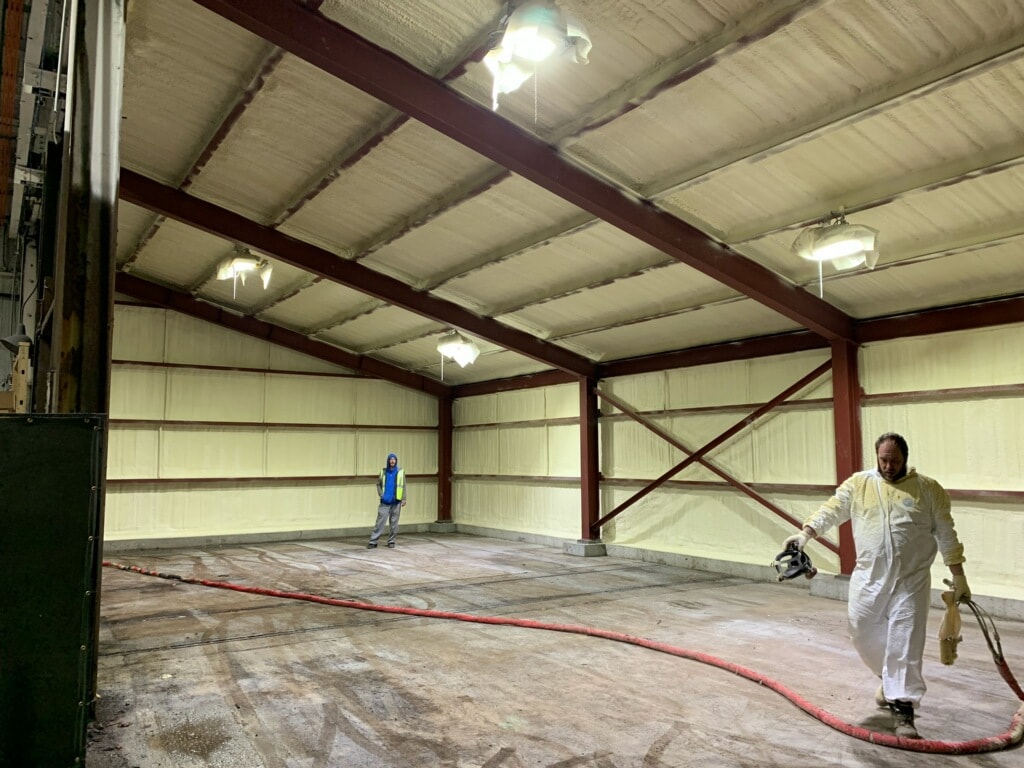
This is the benefit everything else on this list depends on. If you want a side-by-side of how foam stacks up against batts, blown-in cellulose and mineral wool, read our breakdown of the types of thermal insulation.
2. Lower Heating and Cooling Bills
Air sealing alone is one of the highest-return energy improvements a homeowner can make, and foam delivers it as a side effect of insulating. Homeowners who foam the attic plane and rim joist commonly report heating and cooling costs falling somewhere between 20% and 40%, with the biggest swings in older houses that were leaking badly to begin with.
There is a second, quieter savings on top of that. A tighter, better-insulated house has a smaller heating and cooling load, which means the next furnace and air conditioner can be smaller. Right-sizing equipment at replacement time saves thousands up front and lets the system run in long, efficient cycles instead of short-cycling itself to an early death.
3. More R-Value in Less Space
Open-cell spray foam runs about R-3.5 to R-3.8 per inch. Closed-cell runs about R-6.5 to R-7 per inch — the highest of any insulation commonly sprayed in a house. That density matters any time you are fighting for depth: a 2x4 exterior wall, a cathedral ceiling with no room for a vent chute, a bonus room over a garage, a knee wall, a box truck or trailer.
Closed-cell foam can hit R-13 in a 2-inch lift where fiberglass would need six inches to get there. When the cavity is all you have, the material that packs the most performance per inch wins. Which of the two foams belongs in your project is its own decision — we walk through it in detail in open cell vs. closed cell insulation.
4. Moisture and Condensation Control
Cold surfaces plus humid indoor air equals condensation, and condensation is what actually destroys framing. Closed-cell foam at roughly 1.5 to 2 inches functions as a Class II vapor retarder, so it does two things at once: it keeps the sheathing warm enough to stay above the dew point, and it stops moisture-laden indoor air from ever reaching that cold surface.
The rim joist is the textbook example. It is the coldest wood in most Michigan basements, it sits directly above the sill plate, and a fiberglass batt stuffed in front of it does nothing but hide the condensation that forms behind it. Two inches of closed-cell foam in that same cavity eliminates the problem outright. The same logic applies to crawl space walls, the underside of a steel roof deck, and any surface that gets cold on one side while conditioned air sits on the other.
Closed-cell foam also does not absorb and hold water the way a fiberglass batt or a mineral wool sheet will after a leak, so a small plumbing failure stays a small plumbing failure instead of becoming a mold remediation.
5. Structural Rigidity — a Benefit Only Closed-Cell Gives You
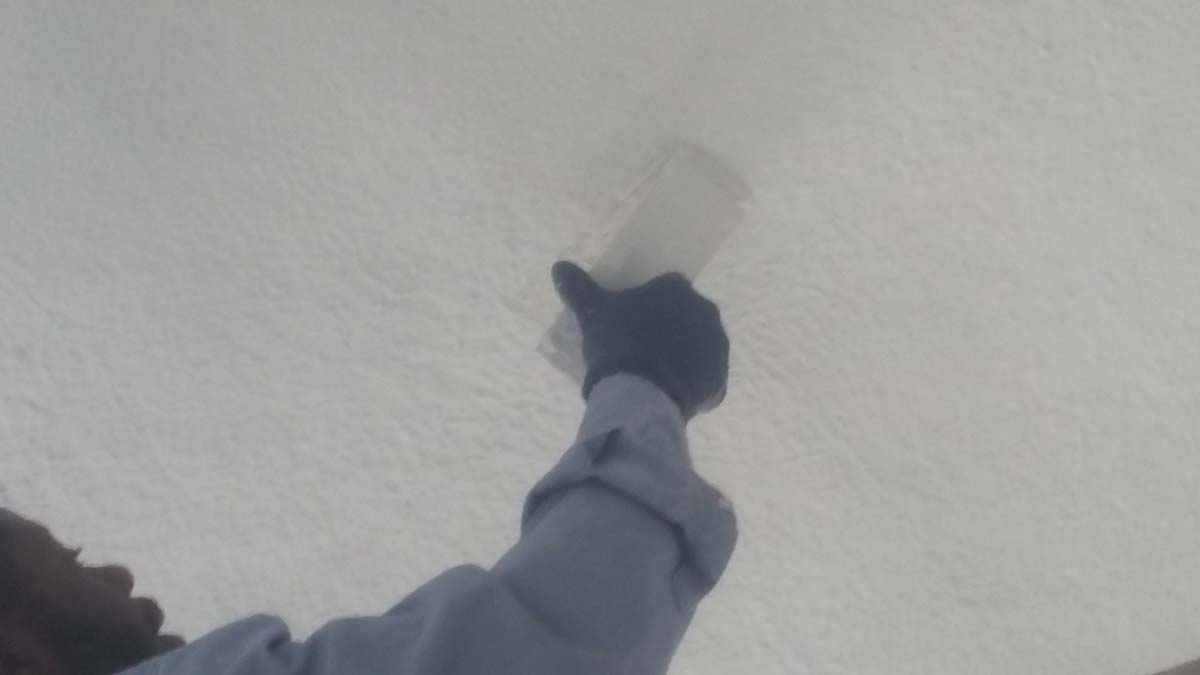
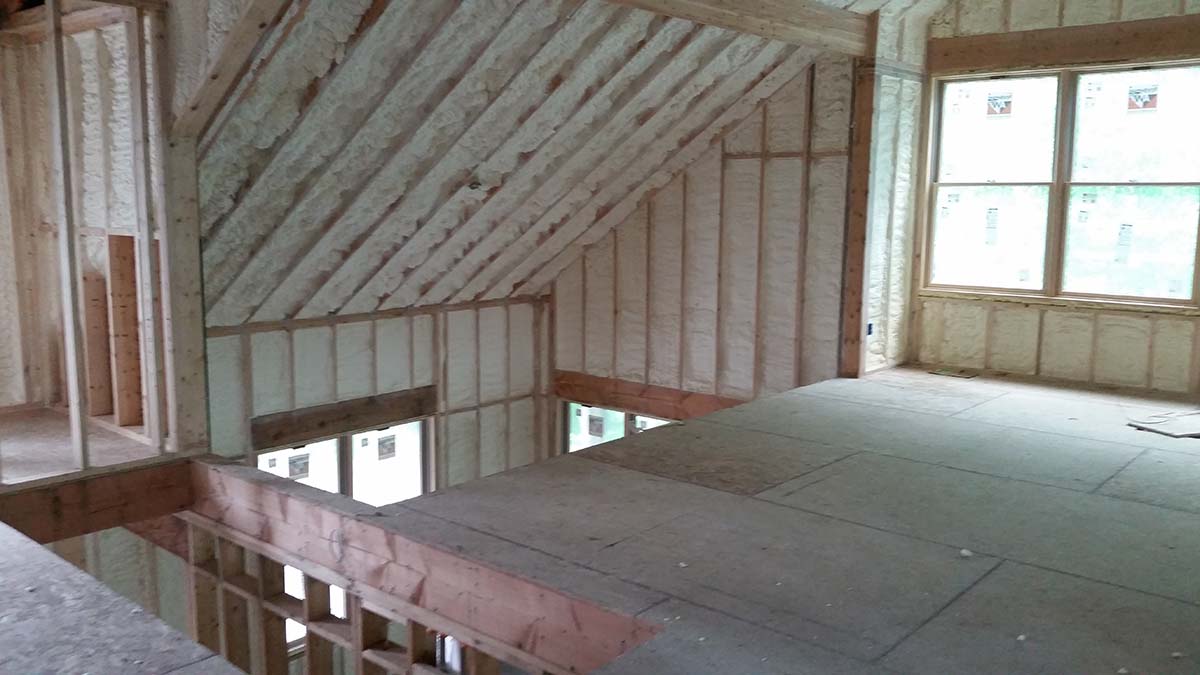
Cured closed-cell foam is a rigid, adhered plastic, not a blanket. Sprayed into wall cavities it bonds the studs, sheathing and plates into a single assembly, and independent testing has shown racking strength gains on the order of 200% to 300% over an unfoamed frame.
On a roof deck that adhesion also resists wind uplift, which is why closed-cell is the standard call for pole barns, metal buildings and any structure with a large exposed roof plane. It is not a substitute for engineered bracing — it is strength you get for free alongside the R-value.
6. A Noticeably Quieter House
Open-cell foam is the better sound performer of the two. Its soft, spongy cell structure absorbs airborne sound rather than reflecting it, which makes it a favorite for interior walls between bedrooms, home offices, media rooms, laundry rooms and any house sitting near a highway or a busy county road.
Closed-cell is denser and does less for sound absorption, though sealing the leaks still cuts the whistling and traffic noise that was coming straight through the gaps. If quiet is a priority for a specific room, tell your estimator — it can change which foam we recommend for that wall.
7. Cleaner Indoor Air and Fewer Allergens
A leaky house does not pull its make-up air from a nice clean place. It pulls it up through the crawl space, past the dirt floor and the rodent droppings, and out into your living room — that is the stack effect at work every cold day of the year. Sealing the crawl space and the attic plane closes that pathway and measurably cuts airborne dust, pollen, mold spores and soil gas.
One important caveat, and it is the mark of a contractor who knows what they are doing: once a house is genuinely tight, it needs deliberate ventilation. Any atmospherically vented furnace or water heater has to be evaluated for combustion safety, and most tightened homes benefit from mechanical fresh-air ventilation. We check for this on every job rather than tightening a house up and walking away.
8. It Lasts as Long as the Building
Fiberglass batts sag and slump out of stud bays over the decades; blown-in settles. Foam does neither — it is bonded in place and does not lose R-value with age. Properly installed spray foam is generally expected to perform for the service life of the structure, and it gives rodents and insects nothing to nest in or eat.
That longevity is the whole ROI argument. You are not buying a material that has to be topped up in fifteen years; you are buying an envelope upgrade that keeps paying every heating season for as long as you own the building.
Benefits of Open-Cell Spray Foam Specifically
People often ask about the benefits of open-cell spray foam insulation as if it were the budget compromise. It is not — it is the right tool for different assemblies. Open-cell delivers the same air-sealing benefit as closed-cell at a lower cost per inch, its flexibility lets it move with wood framing without cracking, it is the better sound absorber of the two (the reason we spray it in interior walls and media rooms), and its vapor-open structure lets incidental moisture dry through instead of trapping it. Closed-cell earns its premium where you need maximum R in minimal depth, a vapor retarder, or structural stiffening — rim joists, roof decks, metal buildings. The honest answer is that most whole-house jobs use both, each where it wins.
What All of This Means in a Michigan Winter
Three specific things happen once a Michigan house is properly foamed.
- Ice dams stop forming. Ice dams are a heat-loss symptom — warm air leaking into the attic melts the snow pack, the meltwater refreezes at the cold eave, and water backs up under the shingles. Seal the ceiling plane and the heat never reaches the roof deck in the first place.
- Cold floors warm up. The single most common complaint we hear is cold floors over a crawl space or unconditioned basement. It is almost always the rim joist and the crawl walls, and it is usually a one-day fix.
- Temperatures even out room to room. The bedroom over the garage and the room at the end of the run stop being ten degrees off from the thermostat, because the pressure differences driving that imbalance are gone.
What About the Cost?
Spray foam does cost more per square foot up front than fiberglass or blown-in — that is the honest trade-off, and the payback comes out of the utility bill over the following years rather than on day one. Most Michigan homeowners see the math work out fastest on attics, rim joists and crawl spaces, where the leakage is worst. We put real numbers, R-values and payback periods side by side in is spray foam worth it? — start there if cost is your deciding factor.
Where These Benefits Show Up First
Not every part of a building returns the same value per dollar of foam. If you are deciding what to insulate first, our companion guide covers where to use spray foam insulation — crawl spaces, attics, rim joists, pole barns, storage tanks and flat commercial roofs — with an open-cell or closed-cell recommendation for each space.
SprayTight has been installing spray foam insulation across Michigan out of Columbiaville for years, on everything from single-family attics to industrial tanks. See the areas we serve or request a free estimate and we will tell you honestly where foam will and will not pay for itself in your building.
Recommended Posts
- Where to Use Spray Foam Insulation
- What Is Open Cell and Closed Cell Insulation?
- Is Sprayfoam Worth It?
Ready to Insulate Smarter?
Free, no-obligation project pricing from Michigan's trusted spray foam pros — wherever your project is.
Get Project Pricing (810) 366-0568