
Spray foam is not an all-or-nothing decision. Some parts of a Michigan building return their cost in a couple of heating seasons; others are better served by blown-in or batts. This guide goes space by space — what makes each area a good candidate, whether open-cell or closed-cell belongs there, and what a homeowner or facility manager should actually expect during the job.
If you are still weighing whether foam is the right material at all, start with the benefits of spray foam insulation and then come back here to decide where to spend the money.
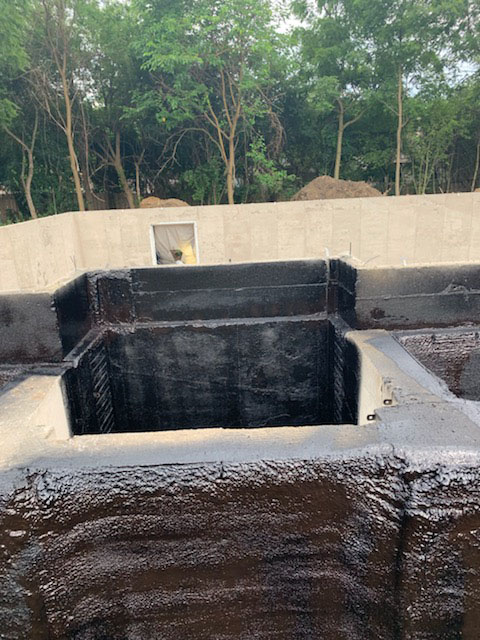
Crawl Spaces and Basements
Crawl spaces are the highest-value foam job in most Michigan houses, and it is not close. A vented crawl pulls cold, damp air in all winter, that air rises into the house through the stack effect, and the floor above it never gets warm no matter what the thermostat says.
The right fix is encapsulation: seal the vents, cover the dirt floor with a vapor barrier, and spray 2 to 3 inches of closed-cell foam on the foundation walls and rim joist rather than trying to insulate the floor above. That brings the crawl inside the building envelope, keeps the plumbing from freezing, and stops the ground moisture that feeds mold.
Batt insulation is the wrong tool here and always has been. It sags off the joists within a few years, it absorbs moisture, and once it is wet it holds that water against the framing. Closed-cell foam is adhered, does not absorb water, and does not come down.
Basements follow the same logic — foam the walls and the rim joist, and check our basement spray foam insulation page for how a finished-basement job differs from an unfinished one.
Attics
There are two legitimate ways to insulate an attic, and the right one depends on where your ductwork and air handler live.
Foam the roof deck (unvented assembly). Spray the underside of the roof sheathing and the gable ends, and the entire attic becomes conditioned space. This is the right call when HVAC equipment or ducts are up there, because you stop losing conditioned air into a 10-degree attic. Open-cell is common on the deck in this application; closed-cell is used where uplift resistance or a vapor retarder is needed.
Air-seal and insulate the ceiling plane. Seal every top plate, wire penetration, can light and chase with foam, then blow the depth on top. This is often the more cost-effective path when the attic is empty of mechanicals, and we do it with blown-in insulation over a foam air seal.
Either way, sealing the attic is what ends ice dams — they are caused by heat leaking up and melting the snow pack, not by bad gutters. See attic spray foam insulation in Michigan for what a typical attic job involves.
Rim Joists — the Small Job With the Biggest Payback
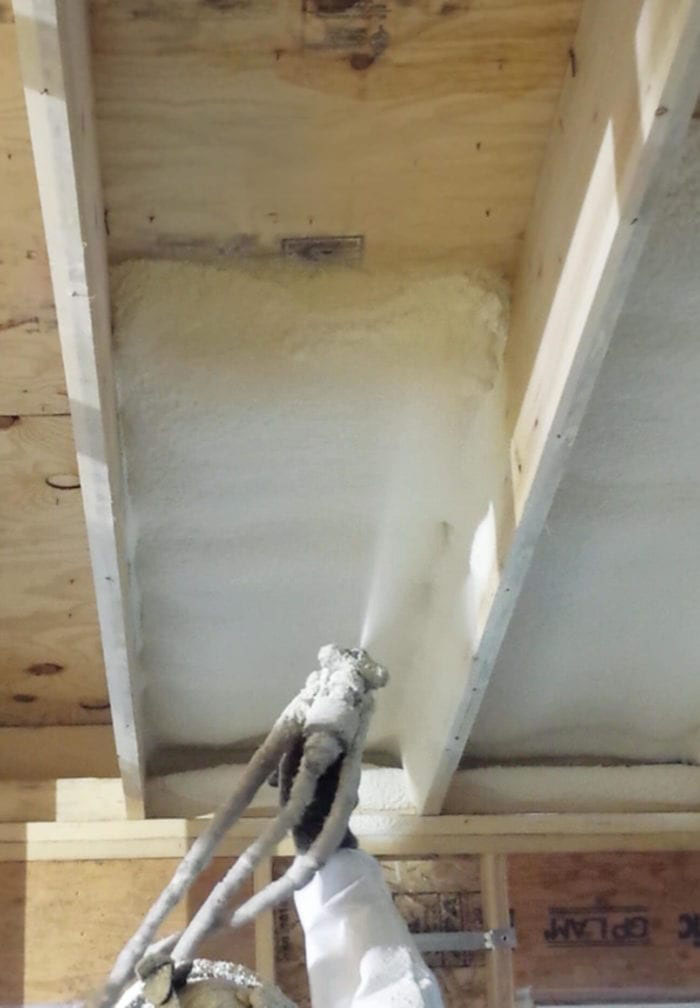
If you only have the budget for one thing, do the rim joist. It is the band of framing that sits on top of the foundation wall around the entire perimeter of the house, it is thin, it is cold, and in most homes it is either empty or stuffed with a fiberglass batt that is doing nothing but hiding condensation.
Two inches of closed-cell foam across the rim seals dozens of feet of leakage in a few hours of work, warms the floor above it, and takes the dew point out of the wood. On a per-dollar basis nothing else in the house comes close. It is also the ideal add-on to any basement or crawl space job — the crew is already there and already set up.
Pole Barns, Metal Buildings and Garages
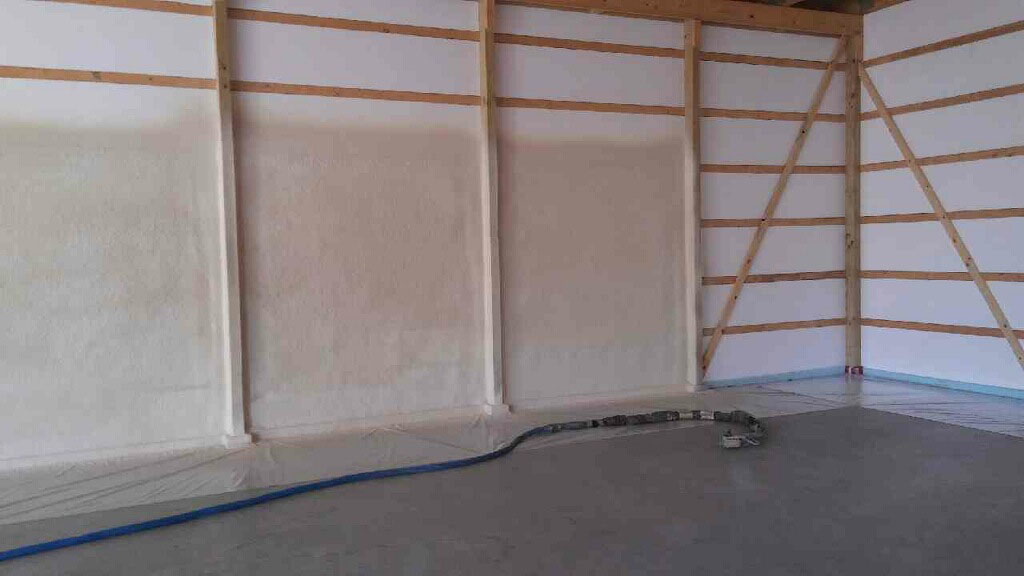
Steel buildings have a problem no amount of fiberglass solves: the underside of the roof panel goes below the dew point on a cold night and rains condensation on everything stored below it. Vinyl-faced batts and bubble wrap slow it down; they do not stop it.
Closed-cell foam sprayed directly to the underside of the steel is the standard fix. At 2 to 3 inches it acts as its own vapor retarder, so there is no separate barrier to install and no gap for humid air to reach the cold metal. It also adheres to the panels, which adds meaningful resistance to wind uplift on a big exposed roof plane.
The same treatment turns an unheated garage or shop into a space a small unit heater can actually keep at 55 degrees all winter. Details are on our pole barn spray foam insulation and metal building insulation pages.
Expect the building to be emptied or heavily masked before we spray, and expect to stay out of it for roughly 24 hours while it cures and ventilates.
Chemical, Water and Storage Tanks
Tank insulation is a different discipline from house insulation, and it is one of the things SprayTight is known for. The goal is not comfort — it is holding a product at temperature, protecting it from freezing, and keeping condensation off the shell.
Sprayed closed-cell polyurethane foam is the best available option for tanks because it is applied seamlessly. It conforms to any diameter, wraps around nozzles, manways, ladders and saddles, and leaves no joints or fasteners for water to get behind — the exact places a wrapped or panelized system fails first. Two to four inches is typical depending on the process temperature and the ambient swing.
Foam on an outdoor tank is never left bare. UV destroys polyurethane, so every tank gets a protective topcoat — usually an elastomeric or polyurea coating — which also gives the tank an abrasion- and chemical-resistant surface. Facilities that need containment as well should look at secondary containment coatings.
We insulate propane, chemical, process water, fuel oil and potable water tanks in the field, above ground and in service. See spray foam for storage tanks for scope and prep requirements.

Commercial Flat Roofs and SPF Roofing Systems
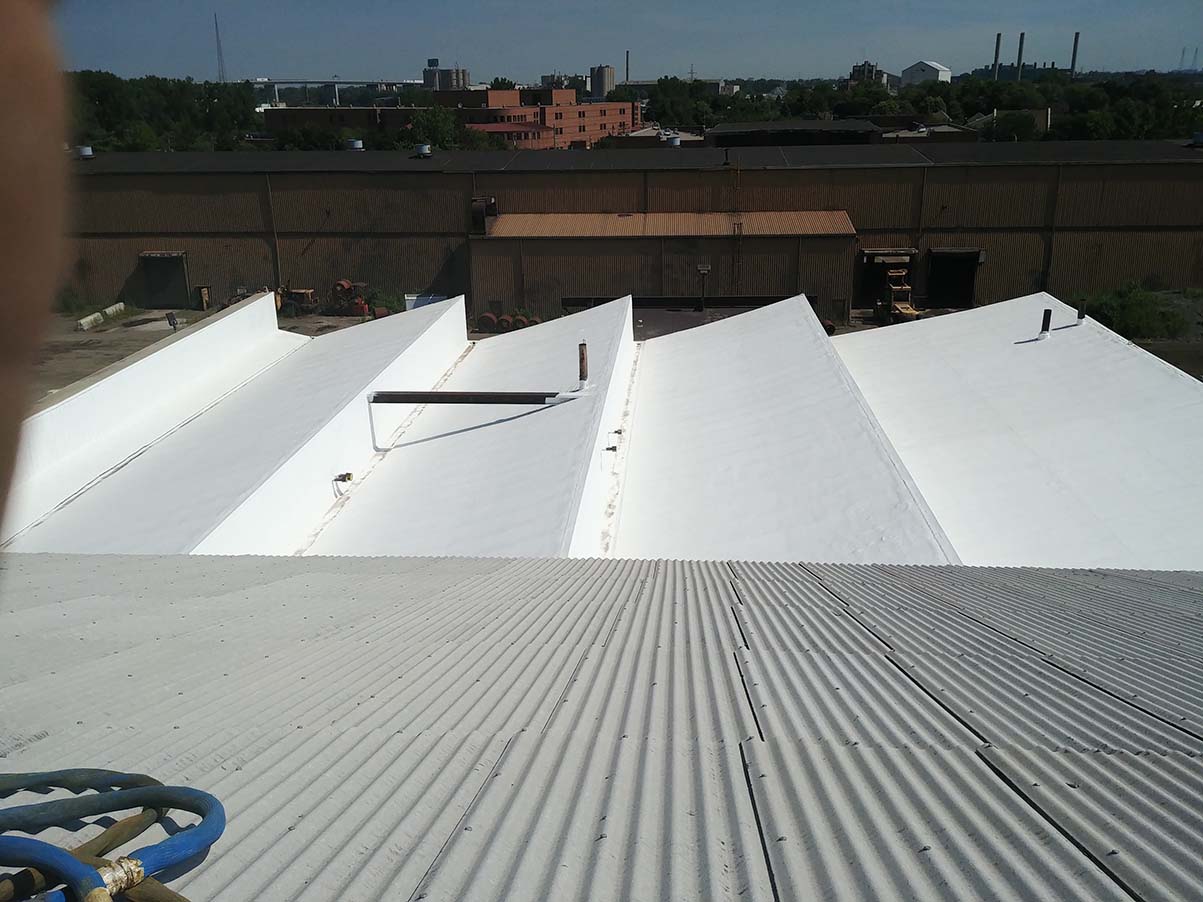
On a low-slope commercial roof, spray polyurethane foam is both the insulation and the waterproofing membrane. It is applied over the existing roof in most cases — no tear-off, no dumpsters, no exposing the building — which is usually the single biggest cost saving on the project.
Because the foam is sprayed, it is self-flashing. Curbs, drains, pipe penetrations and HVAC units get sealed monolithically instead of being detailed with dozens of separate flashings, and those details are exactly where built-up and single-ply roofs leak. Foam can also be sprayed thicker in the low spots to build positive drainage and eliminate ponding.
The foam is then covered with a silicone or acrylic coating for UV protection. A properly maintained SPF roof is renewable — recoat it every 15 to 20 years and the roof keeps going rather than being replaced.
More detail is in our polyurethane roofing system and commercial roof coatings pages, plus a step-by-step walkthrough in enhancing your flat roof’s performance.
Quick Reference: Which Foam Goes Where
- Crawl space and foundation walls — closed-cell, 2 to 3 inches.
- Rim joist — closed-cell, 2 inches.
- Attic roof deck, unvented — open-cell is common; closed-cell where a vapor retarder or uplift resistance is required.
- Interior walls for sound — open-cell.
- Pole barn and metal building roof deck — closed-cell, 2 to 3 inches.
- Storage and process tanks — closed-cell plus a protective UV topcoat.
- Low-slope commercial roof — roofing-grade closed-cell SPF plus a silicone coating.
The full comparison of the two materials — R-value, permeability, cost and where each one fails — is in open cell vs. closed cell insulation.
Where Spray Foam Usually Is Not the Answer
An honest contractor tells you where to spend less. If your attic is unfinished, has no mechanicals in it and the ceiling plane is easy to reach, air sealing plus blown-in is often the smarter buy than foaming the whole deck. Historic structures are another case — foam is not reversible, and in a building with original fabric worth preserving that can be a real problem. Knob-and-tube wiring has to be replaced before anything gets buried, period.
We would rather scope the right job than the biggest one. Look through the full list of spray foam services and unique spray foam applications, check the Michigan areas we serve, then get in touch for a free estimate and we will walk the building with you.
Recommended Posts
- The Benefits of Spray Foam Insulation for Michigan Homes
- Enhancing Your Flat Roof’s Performance
- What Is Open Cell and Closed Cell Insulation?
Ready to Insulate Smarter?
Free, no-obligation project pricing from Michigan's trusted spray foam pros — wherever your project is.
Get Project Pricing (810) 366-0568